
Morton’s Neuroma Treatment in Salt Lake City, Utah
Relief for burning, tingling, numbness, and ball-of-foot pain caused by nerve irritation between the toes.
Morton’s Neuroma Treatment in Salt Lake City
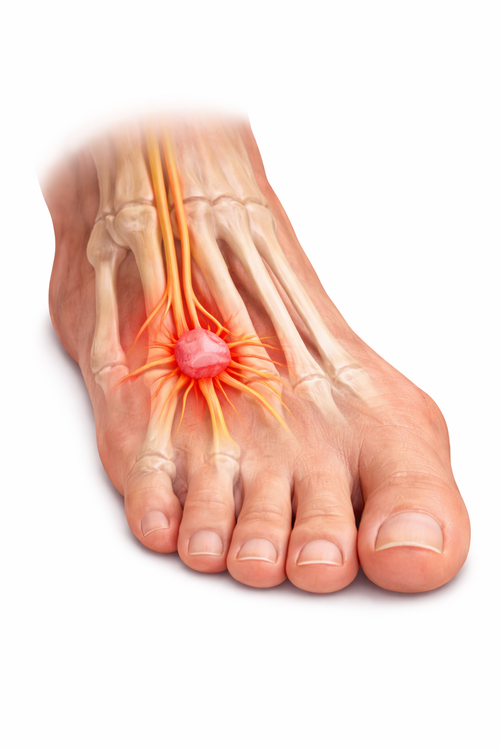
Morton’s neuroma is a painful condition caused by irritation or thickening of a nerve between the toes, most commonly between the third and fourth toes. This nerve irritation can cause sharp, burning, tingling, or shooting pain in the ball of the foot and may worsen when walking, running, standing, or wearing tight shoes.
At Salt Lake City Podiatry, Dr. Zak Oddone provides comprehensive evaluation and treatment for Morton’s neuroma to help patients return to comfortable walking and daily activities. Many patients describe the sensation as stepping on a pebble, having a folded sock under the foot, or feeling numbness and tingling into the toes.
What Is Morton’s Neuroma?
A neuroma is an irritated or thickened area around a nerve. In the foot, Morton’s neuroma usually develops in the forefoot between the metatarsal bones. The nerve becomes compressed or irritated, often from repetitive pressure, tight shoes, abnormal foot mechanics, or increased stress through the ball of the foot.
Although Morton’s neuroma is sometimes described as a “pinched nerve,” the symptoms can feel different from patient to patient. Some people have burning pain, while others mainly notice numbness, tingling, cramping, or discomfort that improves after removing the shoe and massaging the foot.
Symptoms of Morton’s Neuroma
Symptoms often develop gradually and may worsen if nerve irritation continues.
- Burning pain in the ball of the foot.
- Tingling or numbness in the toes.
- Pain when walking, running, or standing for long periods.
- Pain that worsens in tight, narrow, or high-heeled shoes.
- The sensation of stepping on a pebble, lump, or folded sock.
- Temporary relief when removing shoes or massaging the forefoot.
Causes of Morton’s Neuroma
Morton’s neuroma is often caused by repetitive pressure or irritation of the nerve in the forefoot. Identifying the underlying cause helps guide effective treatment and reduce recurrence.
Tight Shoes
Narrow shoes can compress the forefoot and increase pressure on the nerve.
High Heels
High-heeled shoes shift weight toward the ball of the foot and may worsen symptoms.
Running & Sports
High-impact activity can increase repetitive stress through the forefoot.
Foot Mechanics
Flat feet, high arches, bunions, hammertoes, or abnormal pressure patterns can contribute.
How We Diagnose Ball-of-Foot Pain
A careful exam is important because not all pain in the ball of the foot is caused by a neuroma. Similar symptoms can come from capsulitis, metatarsalgia, stress fractures, arthritis, tendon problems, calluses, or joint inflammation. During your visit, we evaluate where your pain is located, what triggers symptoms, shoe fit, foot structure, nerve symptoms, and areas of pressure.
For accurate diagnosis, in-office digital X-rays are available when needed to evaluate the bones and joints of the foot and rule out other causes of forefoot pain. Having digital X-ray imaging available in the office allows for faster diagnosis and treatment planning without needing to visit another facility.
Morton’s Neuroma Treatment Options
Treatment for Morton’s neuroma typically begins with conservative options aimed at relieving pressure on the affected nerve. The best plan depends on symptom severity, activity level, shoe habits, foot structure, and how long symptoms have been present.
Shoe Changes
A wider toe box and lower heel can reduce compression across the forefoot.
Metatarsal Pads
Pads can help spread the metatarsals and reduce pressure on the irritated nerve.
Orthotics
Custom or non-custom orthotics may improve mechanics and reduce forefoot overload.
Anti-Inflammatory Care
Medication or other inflammation-reducing strategies may help during flare-ups.
Corticosteroid Injections
Injections may reduce inflammation and pain around the irritated nerve.
Surgery
If conservative treatment fails, surgery may be considered to address the nerve.
Can Morton’s Neuroma Be Treated Without Surgery?
Many patients improve without surgery, especially when treatment begins early. Conservative care focuses on reducing pressure around the nerve and improving the way the forefoot absorbs weight. Wider shoes, metatarsal pads, orthotics, activity modification, and injections can often reduce pain and improve walking comfort.
The earlier the nerve irritation is addressed, the better the chance of improving symptoms without more invasive treatment. Long-standing nerve irritation can become more persistent and may require additional treatment options.
Footwear, Metatarsal Pads, and Orthotics
Shoe fit is one of the most important factors in neuroma symptoms. Shoes that squeeze the forefoot can compress the nerve and make burning, tingling, and numbness worse. A wider toe box, lower heel, and adequate cushioning can reduce pressure and improve comfort.
Metatarsal pads and orthotics can also be helpful. These devices are designed to redistribute pressure across the forefoot and reduce irritation around the nerve. Some patients do well with over-the-counter inserts, while others benefit from custom orthotics based on foot structure and activity demands.
When to See a Podiatrist
Schedule an evaluation if you experience:
- Persistent pain in the ball of the foot.
- Numbness, tingling, or burning into the toes.
- Pain that worsens with walking, running, or activity.
- Forefoot pain that does not improve with rest or shoe changes.
- A feeling of stepping on a pebble, lump, or folded sock.
- Symptoms that keep returning or are limiting daily activity.
Related Conditions We Treat
Forefoot pain can overlap with bunions, hammertoes, calluses, capsulitis, arthritis, stress fractures, and diabetic foot problems. Treating related pressure points and mechanical issues can improve comfort and reduce recurrence.
You may also be interested in our pages on bunion treatment, hammertoe treatment, custom orthotics, diabetic foot care, and conditions we treat.
Why Choose Salt Lake City Podiatry?
- Same-day and same-week appointments available.
- Located in the St. Mark’s Medical Building in Salt Lake City.
- Conservative and surgical treatment options.
- Digital foot and ankle X-rays available in office.
- Accepting Medicare and most commercial insurance plans.
Frequently Asked Questions
Schedule Morton’s Neuroma Treatment
If you are experiencing ball-of-foot pain, burning, tingling, or numbness in Salt Lake City, Salt Lake City Podiatry can help you understand your options.