
Foot & Ankle Sports Injuries
Foot & Ankle Sports Injuries
From ankle sprains and stress injuries to tendon pain and fractures, sports injuries can keep you from doing what you enjoy. Proper diagnosis and treatment can help you recover safely and get back to activity.
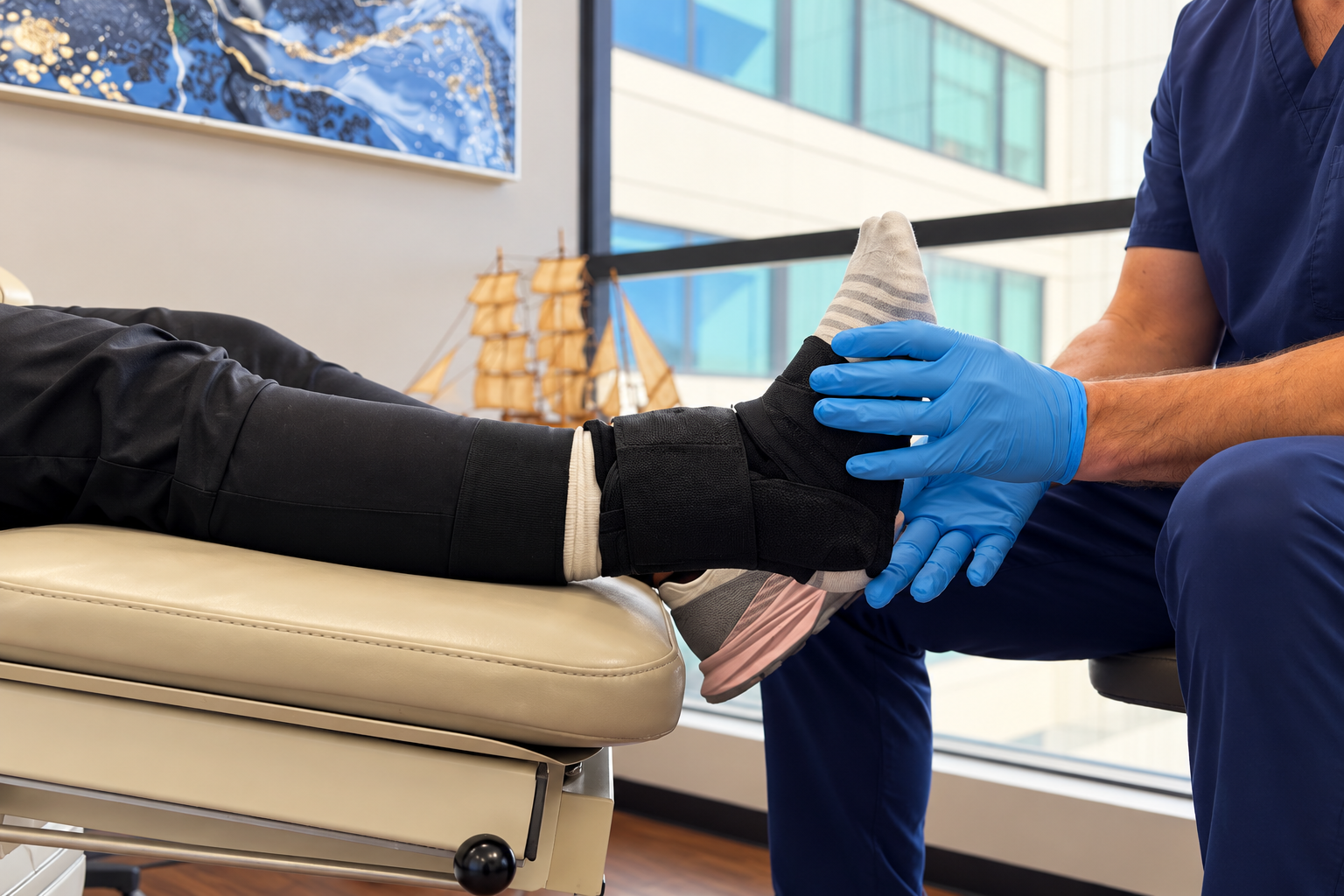
Sports Injuries Can Affect Anyone
You do not have to be a competitive athlete to experience a sports injury. Running, hiking, skiing, basketball, soccer, pickleball, gym workouts, recreational activities, and even an unexpected misstep can injure the foot or ankle.
Some injuries improve with rest and supportive care, while others require imaging, immobilization, physical therapy, or additional treatment. Persistent pain, swelling, bruising, instability, or difficulty walking should not be ignored.
Foot & Ankle Sports Injuries We Treat
Sports-related problems can involve bones, joints, ligaments, tendons, and soft tissues.
Ankle Sprains
Ligament injuries are among the most common ankle injuries. Significant swelling, bruising, instability, or difficulty walking may require further evaluation.
Foot & Ankle Fractures
Fractures may occur after twisting injuries, falls, direct trauma, or repetitive stress. Digital X-rays can often be performed directly in our office.
Achilles Tendon Injuries
Achilles pain may develop gradually from overuse or suddenly after forceful activity. Symptoms can range from tendinitis to complete tendon rupture.
Stress Fractures
Repetitive loading from running, jumping, or increased activity may cause small stress injuries in the bones of the foot or ankle.
Peroneal Tendon Injuries
Pain along the outside of the ankle may involve the peroneal tendons, particularly after repetitive activity or an ankle sprain.
Plantar Fascia & Heel Injuries
Increased activity can aggravate the plantar fascia and other structures around the heel, resulting in pain during walking, running, or athletic activity.
Signs Your Injury May Need an Evaluation
Minor soreness after activity often improves with rest. However, certain symptoms can indicate a more significant injury.
- Difficulty putting weight on the foot or ankle
- Significant swelling or bruising
- Pain that is not improving
- A popping sensation at the time of injury
- Loss of strength or stability
- Recurring ankle sprains
- Pain that returns every time you exercise
- Visible deformity or abnormal positioning
Finding the Cause of Your Pain
A sports injury evaluation begins with a history of how the injury occurred, where the pain is located, and which activities make the symptoms better or worse.
A foot and ankle examination may include evaluation of swelling, tenderness, joint motion, strength, stability, gait, and the surrounding tendons and ligaments.
Digital X-Ray Available in Our Office
When appropriate, digital X-rays can be obtained during your visit to evaluate for fractures, joint injuries, arthritis, and other bone abnormalities. More advanced imaging such as MRI may be ordered when necessary.
How Are Sports Injuries Treated?
Treatment depends on the type and severity of your injury, your activity level, and your recovery goals.
Activity Modification
Temporarily reducing aggravating activity can give injured tissue time to recover while maintaining safe movement whenever possible.
Bracing & Immobilization
An ankle brace, surgical shoe, or walking boot may be recommended to protect an injured structure during healing.
Physical Therapy
Therapy may help restore motion, strength, balance, stability, and confidence before returning to sports.
Orthotics & Shoe Changes
Certain overuse injuries may improve with better shoe support, changes in biomechanics, or custom orthotics.
Medication & Injections
Depending on the diagnosis, anti-inflammatory treatments or other targeted therapies may be considered.
Surgical Treatment
Surgery may be considered for certain fractures, tendon injuries, ligament problems, or other conditions that do not respond to conservative treatment.
Returning to Exercise and Sports
Returning too quickly after an injury may increase the chance of reinjury. A gradual return is often safest, particularly after an ankle sprain, fracture, tendon injury, or prolonged period of immobilization.
Before returning to full activity, we may evaluate pain, swelling, strength, joint motion, balance, and your ability to perform movements related to your sport or activity.
Reducing Your Risk of Another Injury
Foot & Ankle Sports Injury Care in Salt Lake City
We evaluate and treat foot and ankle injuries in athletes and active patients of all ages. Our goal is to identify the cause of your pain, protect the injured area, and develop a plan that helps you return safely to the activities you enjoy.
Foot & Ankle Sports Injury FAQ
When should I see a podiatrist after a sports injury?
Can I have a fracture even if I can still walk?
Do all ankle sprains need a walking boot?
How long should I wait before returning to sports?
Can you take X-rays during my appointment?
Don't Let a Foot or Ankle Injury Keep You Sidelined
Schedule an evaluation at Salt Lake City Podiatry and get a treatment plan designed to help you recover and return to activity safely.
